
Welcome to the Follow the Folklorist blog! Founded by Rebecca Snetlesaar and currently led by Nevada State Folklorist Brad McMullen, our blog is dedicated to exploring the rich tapestry of cultures, traditions, and celebrations that make Nevada such a vibrant state. Through our two main topics, Folklife in Focus and Notes from the Field, Brad will share his unique insights and experiences, providing a captivating glimpse into the diverse and fascinating world of Nevada folk traditions. Join us on this exciting journey as we delve into the stories, customs, and heritage that shape our state’s identity. Get ready to be inspired and amazed!
Biggest Conspiracy Theories in Nevada
As a general rule, a lot of material under the folklore umbrella isn’t, unfortunately, directly relevant to my position as Folklife Specialist at the Nevada Arts Council. Sometimes that’s because of granting restrictions (I don’t think I’d be allowed to give out grants in meme-making, and kids making cootie catchers are all too young to qualify for our grants). Sometimes, it’s because it’s harder to describe and document easily and clearly. One interesting facet of folklore that falls under that is a perpetual favorite of podcasters and documentary filmmakers: conspiracy theories and everything connected to them.
From beliefs about the shape of the Earth or position of the sun to ideas about secret societies and cults secretly controlling the world, conspiratorial beliefs have all the traits that mark something as folklore – they’re traditional, based in a specific cultural context; they’re communal, with like-minded believers creating communities; and expressive, with believers sharing stories and proof about the theories. You can consider them oral narratives, falling somewhere between a legend and a myth depending on how much of a believer the person sharing the conspiracy theory is. As I discussed in the post I just linked to, from a folkloric perspective, I am not interested in how true a story is in real life, just how true the people sharing it believe it is.
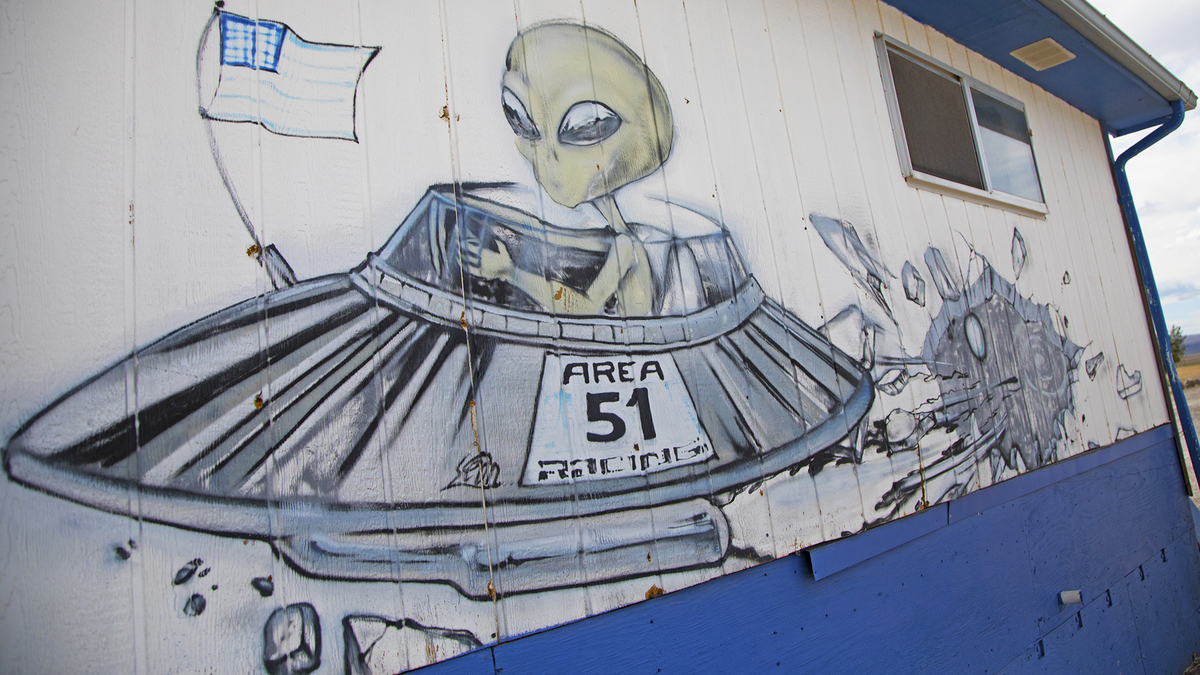
The biggest focus of conspiracy theories in Nevada (and maybe in the United States in general) is Area 51. In case you’re not familiar, Area 51 is a remote, classified Air Force base outside Las Vegas. According to the theories, Area 51 is a hotbed of alien activity, ranging from being where the Air Force experiments with alien technology gathered from crashed UFOs to a spot for interstellar diplomacy to a place where secret cabals meet to determine the fate of the world. Stories detail features like secret underground facilities, strange phenomena, and technology seen in the sky overhead. Official government statements dismiss these stories, but is that just what they want you to think?
While many conspiracy theories remain stories people tell each other, like any other oral narrative, they can still have an impact in the real world. In 2019, people famously got together to storm Area 51 and find out what was inside. No one breached the base, and the event was much smaller than the internet made it seem. But still, oral narratives can have real-world impacts, and conspiracy theories are a case where that can become obvious. I bet you can think of a few other topics currently where conspiracy theories are driving how people act, regardless of how bound in truth the narratives are. Sometimes it results in silly events like the raid on Area 51, but sometimes conspiracy theories can cause real harm, which is why talking about them and understanding where they come from matters.
It’s important to note that while we tend to think of conspiracy theories as big grand narratives, they can be smaller, personal things too. Like your theory that the barista has a crush on you because of the way they did the foam art on your latte, or that the timing of red lights on your commute to work is purposefully designed to make people late. In some ways, conspiracy theories are where myths and legends meet superstitions. Stories about why things are the way they are, combined with practices and beliefs that make things happen.
So, what are some of your favorite conspiracy theories? Anywhere on the range from silly to serious is OK. It’s important to talk about these things, both as a believer and a non-believer. For believers, talking about your beliefs is the best way to help people understand, but if someone expresses the opinion that they don’t believe and don’t want to hear it anymore, you should accept that and respect their wishes. You pushing them will only alienate them and prevent you from making any headway. And for a non-believer, while you are unlikely to get someone to drop a conspiracy theory they truly believe, understanding why they think it and what it might cause them to do can help to mitigate and prevent any harm that might come from it. Ridiculing them to their face will only push them away and isolate them from any help you can provide. Just be open to dialogue, and make sure to let me know what you are hearing, since I’m from the government and here to help.
Visit the Nevada Folklife Archives on Flickr
Folklorists working for the Nevada Arts Council have been documenting folklife and folk arts in Nevada since 1986. After completing an ambitious 10-year project to digitize 22,823 color slides recorded between 1986 and 2005.
We’ve begun to share these images in photo albums on the Nevada Folklife Archives’ Flickr page, along with more recent photography completed over the past 15 years.
Are you conducting a project and looking for photographs? We’ll happily check the archives and post new albums for your viewing pleasure.
