A pattern of vertical stripes in various widths featuring shades of orange, tan, and beige, creating a warm and balanced geometric design.

Grants

We support the work of Nevada arts and cultural organizations and artists with grant funding opportunities.

Nevada Arts Council Funding Opportunities

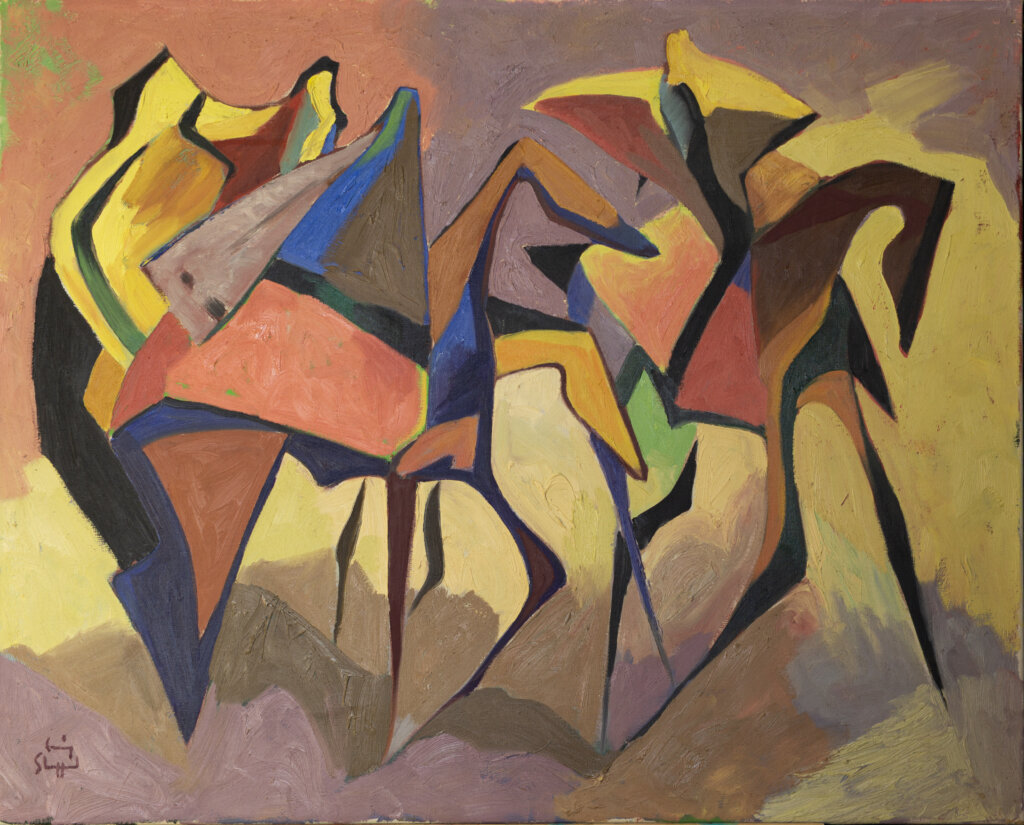
Craig Sheppard, The Couriers, oil on canvas, n.d., collection of the John and Geraldine Lilley Museum of Art

Resources

Virtual Information Sessions
Community Arts Development Program Area – Project Grant for Organizations, Operating Support Grant
Watch Community Arts Development Recording

Artist Services Program Area – Artist Fellowship Award
Watch Artist Services Recording

Arts Learning Program Area – Arts Learning Project, Arts Learning Express, Teaching Artist Directory
Watch Arts Learning Recording

Folklife Program Area- Folklife Artist Grant, Folklife Community Grant, Nevada Heritage Fellowship
Watch Folklife Recording

FAQ

Please refer to individual grant guidelines for specific eligibility requirements for each grant. Eligibility requirements must be met at the time of application.
A. Individuals

  • Must be a current Nevada resident and have been continuously in residence for at least one year before the date the grant application is submitted (must provide proof of residency in the form of a Nevada driver’s license or ID renewed at least one year prior or other official document such as a utility bill, paystub, or lease dated at least one year prior with applicant’s name and address listed).
  • Must be a U.S. citizen or have legal permanent resident status.
  • Must be at least 21 years old (must provide proof of age in the form of a Nevada driver’s license/ID or other official document such as a passport.
  • Must not be currently enrolled as a degree-seeking student in a field related to the type of grant for which they are applying.
  • Must have the ability to receive funds and carry out all requirements for the project.
  • Must not be a current Nevada Arts Council staff member, board member, or immediate family member, or an individual sharing the household of a current staff or board member.
  • Must have an arts and/or cultural program and/or project directly related to Nevada or that serves the residents of Nevada.

B. Nonprofit Organizations (including nonprofit private schools)

  • Organizations located in states that border Nevada may apply for a grant if they are incorporated in Nevada with 501(c)(3) tax-exempt status. However, the application must clearly demonstrate that the majority of the project (at least 75%) serves Nevada communities, and all awarded funds must be used to support Nevada communities.
  • Must clearly demonstrate that most of the project (at least 75%) serves Nevada communities, and all awarded funds must be used to support Nevada communities.
  • Must have federal tax-exempt status under Section 501(c)(3) of the Internal Revenue Code (Fiscal Agents are not accepted).
  • All organizations applying for funding from the Nevada Arts Council are required to have a Unique Entity ID (UEI) from SAM.gov in alignment with requirements from the National Endowment for the Arts. For more information: https://www.nvartscouncil.org/grants/resources-for-grant-applicants/
  • Must have an active incorporation status with the Nevada Secretary of State showing evidence of good standing at the time of application. An indication of active status confirms that the nonprofit corporation is authorized to conduct business in the State of Nevada and has met all licensing and corporation requirements. Applicant organizations can check their status here: https://esos.nv.gov/EntitySearch/OnlineEntitySearch

C. Public Institutions

  • Government Agencies (including federally recognized tribes): Agencies that exist within the same governmental entity are eligible to apply independently when they have different/distinct mission statements and their own separate advisory boards. Multiple departments/facilities within one agency may not apply independently; each agency must collectively determine the programs or projects for which to request funding.
  • Colleges/Universities: Limited to no more than one grant to the same academic department per fiscal year. Projects must serve a broad community outside the institution and generate area-wide arts involvement. Grants may not support the institution’s internal programs.
  • Public Schools and Public Libraries: Individual schools and libraries within the same district/system may apply independently if they have their own budget and facility.

All applications and final reports must be submitted using the online grants system. Please read the grant guidelines fully.
To create an account, log in, or view current grant opportunities, go to: https://nevadaartscouncil.submittable.com/submit.

A. Individuals
In FY27, individuals can apply for the following grants (if they meet all eligibility requirements in the guidelines):

  • FY27 Arts Learning Express Grant
  • FY27 Folklife Artist Grant
  • FY27 Professional Development Grant (Coming Soon)

B. Nonprofit Organizations
In FY27, nonprofit organizations can apply for the following grants (if they meet all eligibility requirements in the guidelines):

  • FY27 Folklife Community Grant
  • FY27 Arts Learning Project Grant
  • FY27 Project Grant for Organizations

C. Public Institutions & Units of Government
Public Institutions can apply for the following grants (if they meet all eligibility requirements in the guidelines):

  • FY27 Arts Learning Express Grant
  • FY27 Arts Learning Project Grant
  • FY27 Folklife Community Grant
  • FY27 Project Grant for Organizations

A. Individuals
If eligible, individuals may receive the following grants in the same fiscal year:

  • Folklife Artist Grant
  • Arts Learning Express Grant

B. Nonprofit Organizations
If eligible, organizations may receive the following grants in the same fiscal year:

  • Operating Support Grant
  • Arts Learning Project Grant
  • Arts Learning Express Grant – up to two in the same fiscal year

Please review deadlines within the Guidelines that are posted on the Grant Offerings page.

The federal government requires organizations and public institutions to have a Unique Entity Identifier (UEI) through SAM.gov as the primary identifier for all entities receiving federal funds, including grants.

Grant applicants will be notified via email of the date and time of the open public meeting, during which a panel will review their application. The Nevada Arts Council encourages applicants to observe panel meetings via the internet or teleconference options. Panel discussions provide insights into effective grant writing and program evaluation. Applicants are requested to refrain from contacting panel members before or during the panel meeting process. Applicants are not required to attend grant panels, nor will absence at these meetings prejudice application review.

After the panel, grantees may request a copy of their panel comments by emailing grants@arts.nv.gov.

This differs for each grant, so please read each grant’s guidelines fully before applying. In addition to the list below, other costs may or may not be allowable depending on the grant program. If in doubt about a particular cost, please contact Nevada Arts Council staff.

Nonallowable costs include:

  • Any portion of a project that duplicates costs in grants pending with, or received directly from, the National Endowment for the Arts
  • Any portion of the same project in multiple grant applications
  • Any portion of completed projects
  • Anything specifically forbidden by Nevada state law or federal law
  • Capital expenditures for land or general-purpose equipment with a cost of over $2,500
  • Cash prizes
  • Competition awards
  • Fees for filing for 501(c)(3) tax-exempt status with the Internal Revenue Service
  • Fines, penalties, or debt collection costs
  • Travel outside Canada, Mexico, the United States, and its territories and possessions
  • Fundraising efforts or the money spent to raise additional funds (such as social events and benefits)
  • Hospitality or entertainment expenses (including food, beverages, and gratuities for openings, receptions, parties, or other hospitality functions)
  • Journalism, historical or academic documentary film, and electronic media arts that do NOT demonstrate significant artistic emphasis, consideration, and distinction
  • Legal fees or litigation costs
  • Lobbying expenses
  • Performances of a prurient nature
  • Preparation for, or travel to, competitions (except for Poetry Out Loud participants)
  • Projects with implicit religious content that may be perceived as advancing a religious purpose
  • Publication subvention
  • Reduction of debt, including interest expenses paid on loans, debts, or borrowed capital
  • Renovation, remodeling, restoration, or new construction
  • Reserve funds
  • Salaries and overhead of government agencies, public institutions, and public and private schools, colleges, and universities
  • Student scholarships for academic credit or awards for student work

A link to your Final Report form will be emailed to you as soon as the Nevada Arts Council receives your initial grant paperwork (Terms and Conditions form, Cash Request Form, etc).

After the awards are announced, recipients will receive an award packet from the Grants Team via Docusign. The packet must be fully executed and signed by the authorized signer, the Nevada Arts Council Grants Team, the fiscal, and the executive director before payment can advance.

Upon receiving the award packet, you will be provided with instructions on how to apply for a vendor number if you do not already have one. A vendor number is required before any payment can be processed.

If this is your first time applying for a vendor number, please note that it can take about 10–15 business days for the State of Nevada Controller’s Office to create and issue the vendor number. Once the vendor number becomes active, payment may be processed.
To avoid delays, please ensure all forms are completed accurately and that addresses are consistent across all submitted documents.
You can contact Nevada Vendor Services directly to check the status of your vendor number:
Phone: 702-486-3895
Email: vendordesk@sco.nv.gov

Authorizing Official – An individual in your organization who is legally authorized to obligate the organization to contract. For most organizations, this would be the president or treasurer of the board of directors. The Authorizing Official may be different from the Contact Person.

Capital Expenditures – The costs of permanent equipment, construction, and repairs that increase the value or useful life of buildings or equipment. Includes endowments and reserve accounts.

Contracted Services – Includes the sale of workshops, classes, or other professional services performed by the applicant organization for other community organizations, government contracts for performance, touring, or residency fees.

Indirect Costs – Indirect costs are defined as the expenses of doing business that are not readily identified with a particular grant or project. They may include administration, personnel, or other allowable expenses.

In-Kind Contributions – In-kind (non-cash) contributions demonstrate both community support and the true cost of producing a program or project or operating a nonprofit arts/cultural organization. In-kind contributions are provided by volunteers or outside parties. Donated goods and services must be necessary to the organization; that is, they are goods or services with cash value that the organization would have to purchase if not donated. An example of an in-kind contribution is a venue provided free of charge, but which would normally be rented for cash. Independent Sector, a national organization, provides the current volunteer time/value per state.

Operating Costs – Costs to the applicant organization related to the day-to-day operations of the organization and not related to one specific project or program; including administrative salaries and benefits, payroll expenses, insurance, facility space rental, utilities, contracted and professional services, storage, postage, subscriptions, shipping, and hauling expenses.

Outside Fees and Services
Artistic – Payments to firms or persons for the artistic services or consultant services of individuals who are not considered employees of applicant organizations and whose services are specifically identified in the application. Examples: guest professionals such as artistic directors, jurors, conductors, curators, dance masters, composers, choreographers, visual and performing artists, etc.

Technical – Payments to firms or persons for the technical and production services by other persons who are not considered employees of the applicant organization. Examples are
lighting crews, stage managers, costume crews, art packers, installers, preparators and other contractors.

Personnel
Administrative – Payments for employee salaries and benefits of executive and supervisory administrative staff, program directors, managing directors, and support staff.

Artistic – Payments for employee salaries and benefits for artistic directors, conductors, curators, composers, choreographers, designers, visual, performing, and literary artists.

Technical – Payments for employee salaries, wages, and benefits, as well as production specifically identified within the application for technical management such as: technical directors; wardrobe, lighting, sound, and stage crews; video and film technicians; and exhibit preparators.

Public Component – An activity of a project that is advertised and open to the general public, typically without charge.

Join A Grant Panel!