

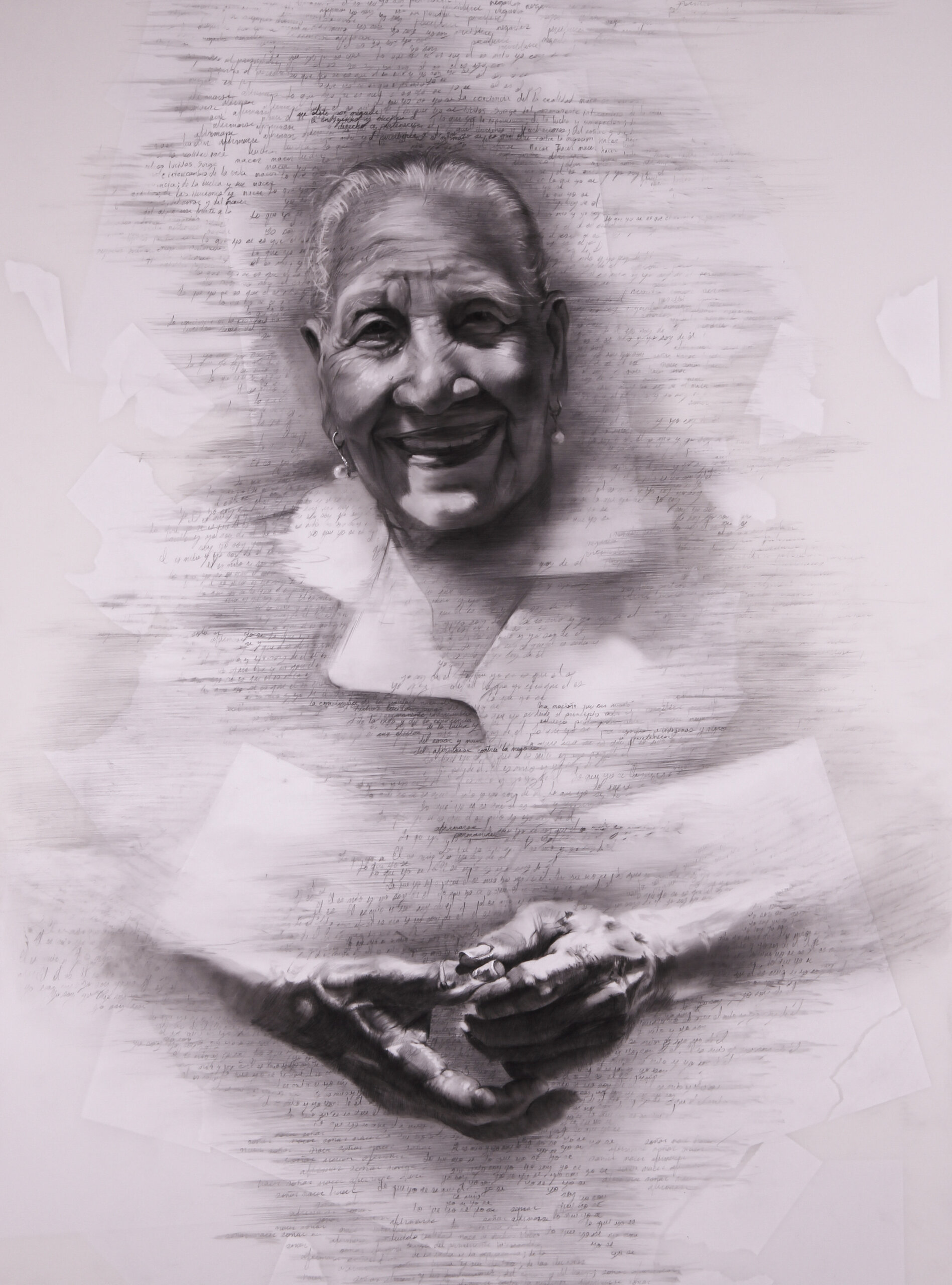
The College of Southern Nevada, School of Arts & Letters, and Department of Fine Arts will host a gallery talk and artist reception, with refreshments, in conjunction with the current exhibition of large-scale drawings and mixed media artwork by Afro-Colombian artist and assistant professor of art at the University of Kentucky, Daniel Esquivia Zapata. “Daniel Esquivia Zapata: The Right of Permanence” opened Friday, Oct. 3, 2025, and runs through Wednesday, Nov. 26, 2025, in the Fine Arts Gallery on the North Las Vegas campus of the College of Southern Nevada. The special gallery talk and artist reception, will take place on Thursday, Oct. 16, 2025, at 6 p.m.
Esquivia Zapata holds an Master of Fine Arts from the New York Academy of Art and a Bachelor of Arts in studio art from Benedict College (Historical Black College). Before teaching at the University of Kentucky, Esquivia Zapata taught at various institutions, including Pontificia Universidad Javeriana in Bogotá, Colombia, where he focused on a wide range of drawing courses, including human anatomy, figure drawing, fundamental drawing, and experimental drawing, in addition to his teaching responsibilities. Esquivia Zapata has a strong exhibition record with solo and group shows across the United States, Colombia, and internationally. His work has been featured in venues such as the Whatcom Museum and the Richard Demato Gallery. He has also participated in numerous artist residencies, including the Santa Fe Art Institute and a fellowship at the Vermont Studio Center; recently, he was a summer artist at 701 CCA in Columbia, South Carolina, Blue Mountain Center in New York, and was selected as a 2025 visiting artist to the Gibbes Museum of Art. His contributions to the art community extend beyond the classroom and gallery. He has been involved in public art projects, including murals that address memory and social justice themes. His research and presentations often explore the intersection of art, violence, and historical memory, reflecting his commitment to using drawing as a tool for social change and as a mode of inquiry.
Esquivia Zapata’s work explores historical memory, official narratives, and the politics of remembering. Through life-size figurative drawings, he merges historical texts, the human form, flora, and fauna to craft spaces rich in poetic imagery. These artworks probe narrative dynamics in history and memory. Employing traditional figure drawing techniques, liquid charcoal, and fragmented texts, he layers mylar to create life-size drawings. These pieces symbolize political bodies entwined with history, newspapers, and archives. Esquivia Zapata seeks to unveil the “place of memory” within our bodies amid intersecting discourses, making tangible the essence of our collective past and present.