Six Ways of Seeing
Nevada Touring Initiative

This exhibition features works from the 2025 Nevada Arts Council Visual Arts Fellows.
In a world shaped by constant scrolling and quick impressions, Six Ways of Seeing invites viewers to slow down and find meaning in art. Together, these pieces remind us that art isn’t just something to glance at—it’s something to spend time with, reflect on, and connect to.
Linda Alterwitz
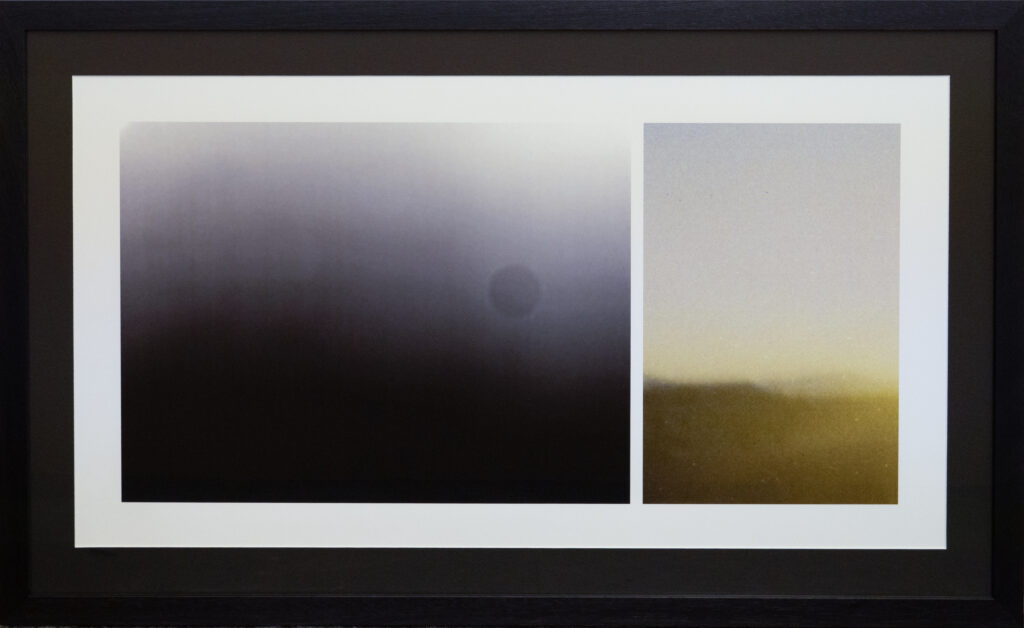
Title: Conversations: 36.6N,115.2W and 36.6N,115.2W
Medium: Thermal photograph
Year: 2025
Dimensions: 24.5 x 39.5 x 1 in
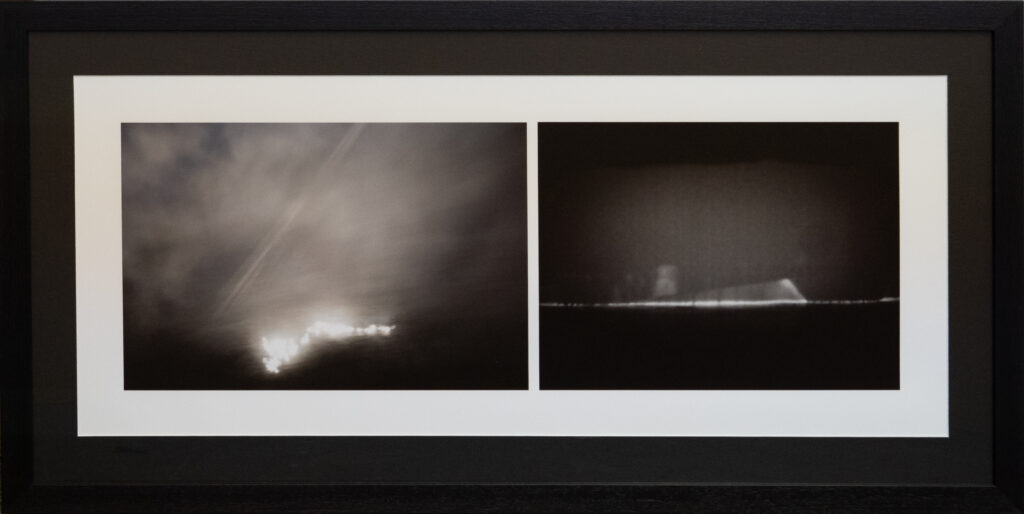
Title: Conversations: 52.2N,45.0W and 76.2N,83.5W
Medium: Thermal photograph
Year: 2025
Dimensions: 20 x 39.5 x 1 in
Lolita Develay
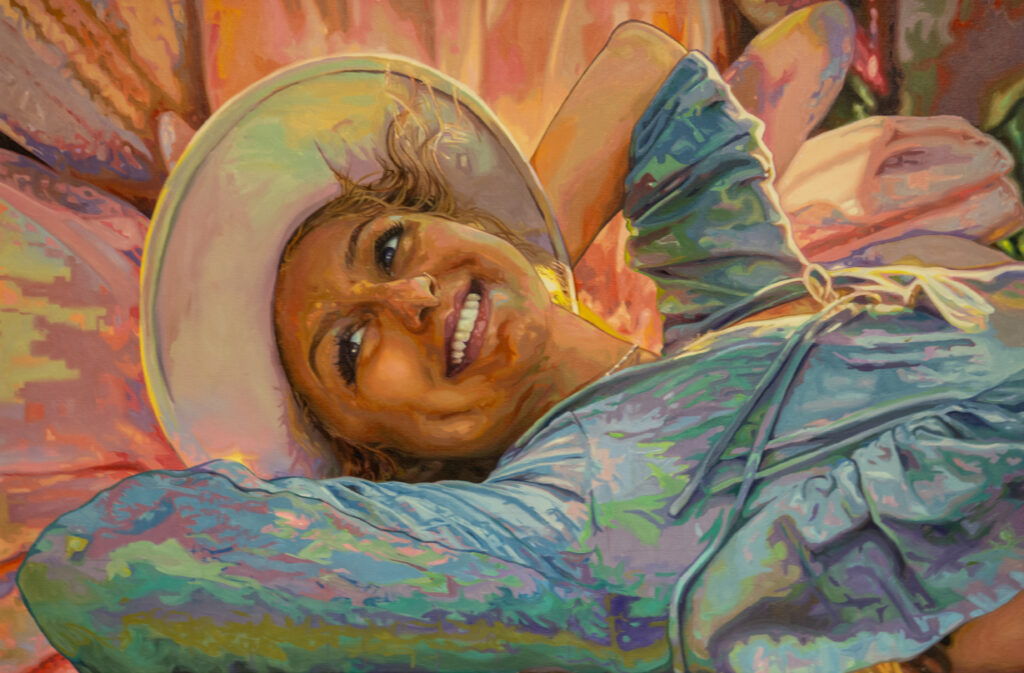
Title: Livi Shines
Medium: Oil on canvas
Year: 2025
Dimensions: 24 x 36 x 1.5 in
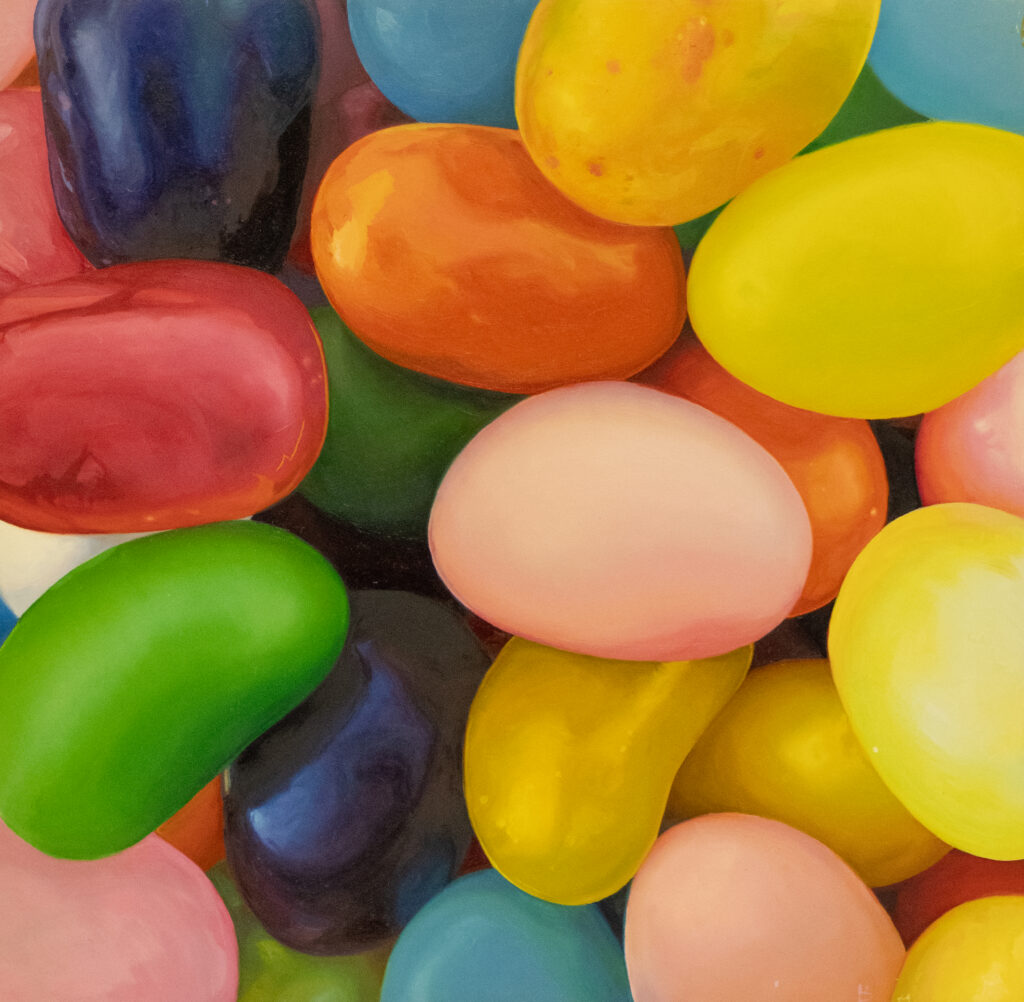
Title: Spill the Beans 2
Medium: Oil on canvas
Year: 2020
Dimensions: 16 x 16 x 1.5 in
Frances Melhop
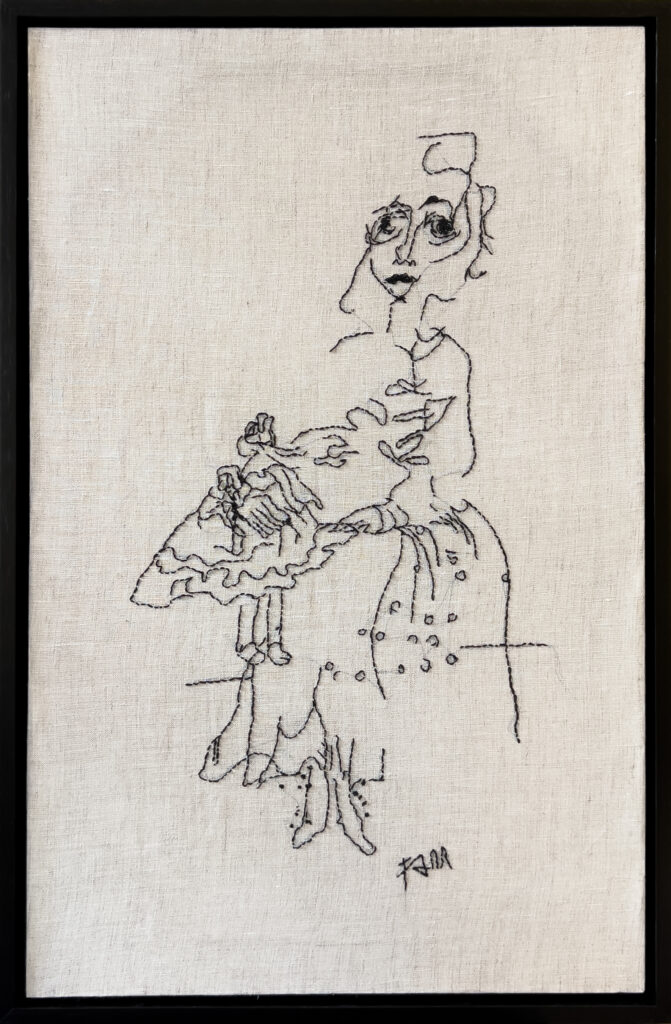
Title: Odd Girl 1
Medium: Blind contour
embroidery, cotton thread on
British linen
Year: 2021
Dimensions: 26.5 x 17.5 x 2 in
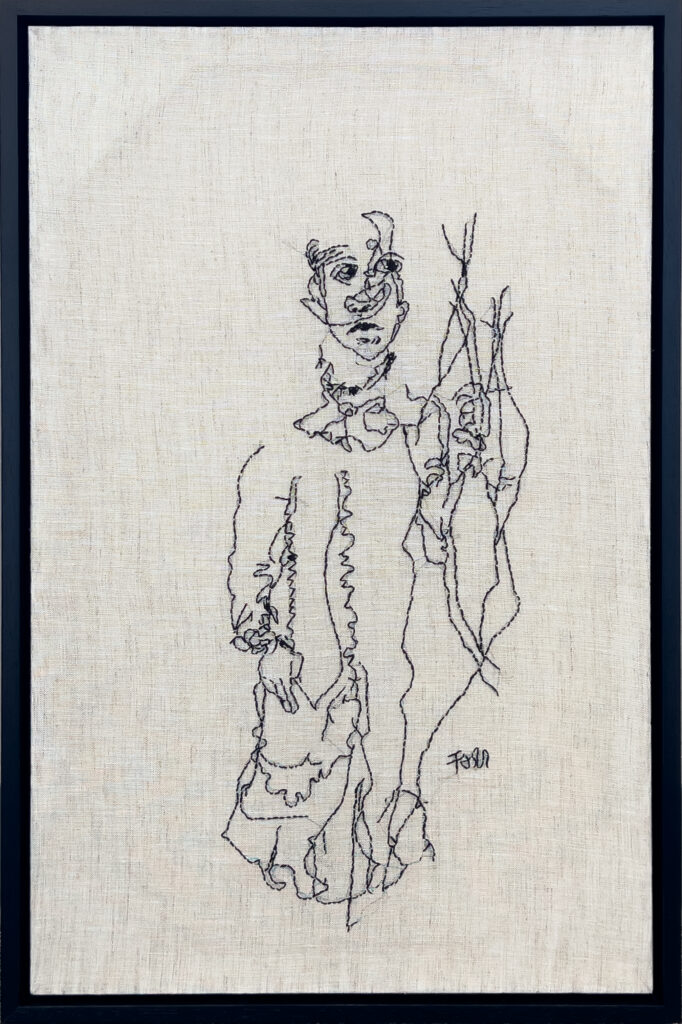
Title: Odd Girl 2
Medium: Blind contour
embroidery, cotton thread on
British linen
Year: 2021
Dimensions: 26.5 x 17.5 x 2 in
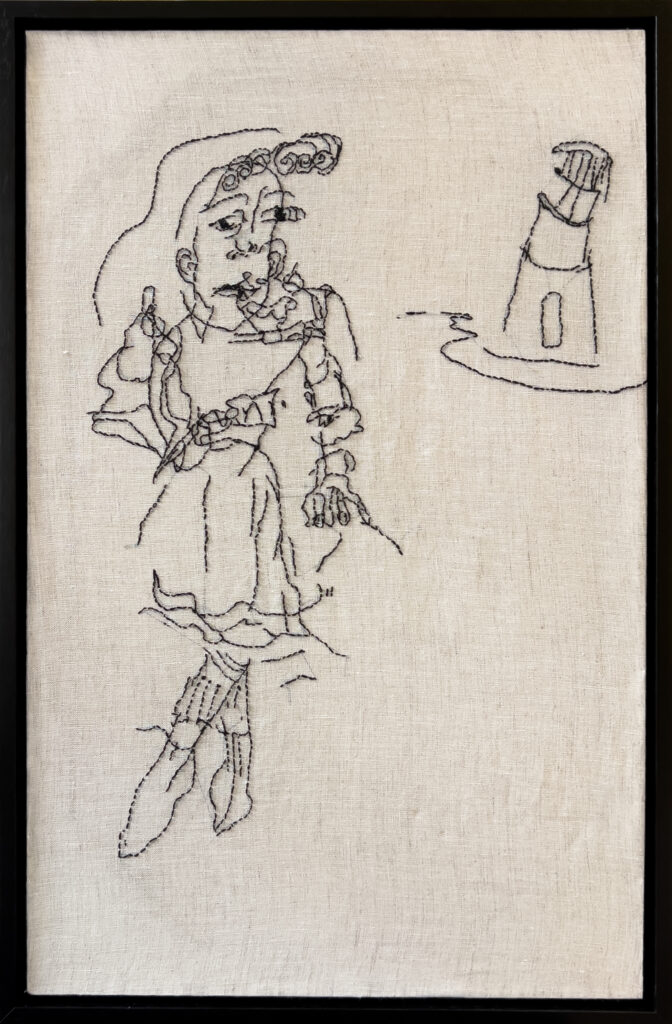
Title: Odd Girl 3
Medium: Blind contour
embroidery, cotton thread on
British linen
Year: 2021
Dimensions: 26.5 x 17.5 x 2 in
Jung Min
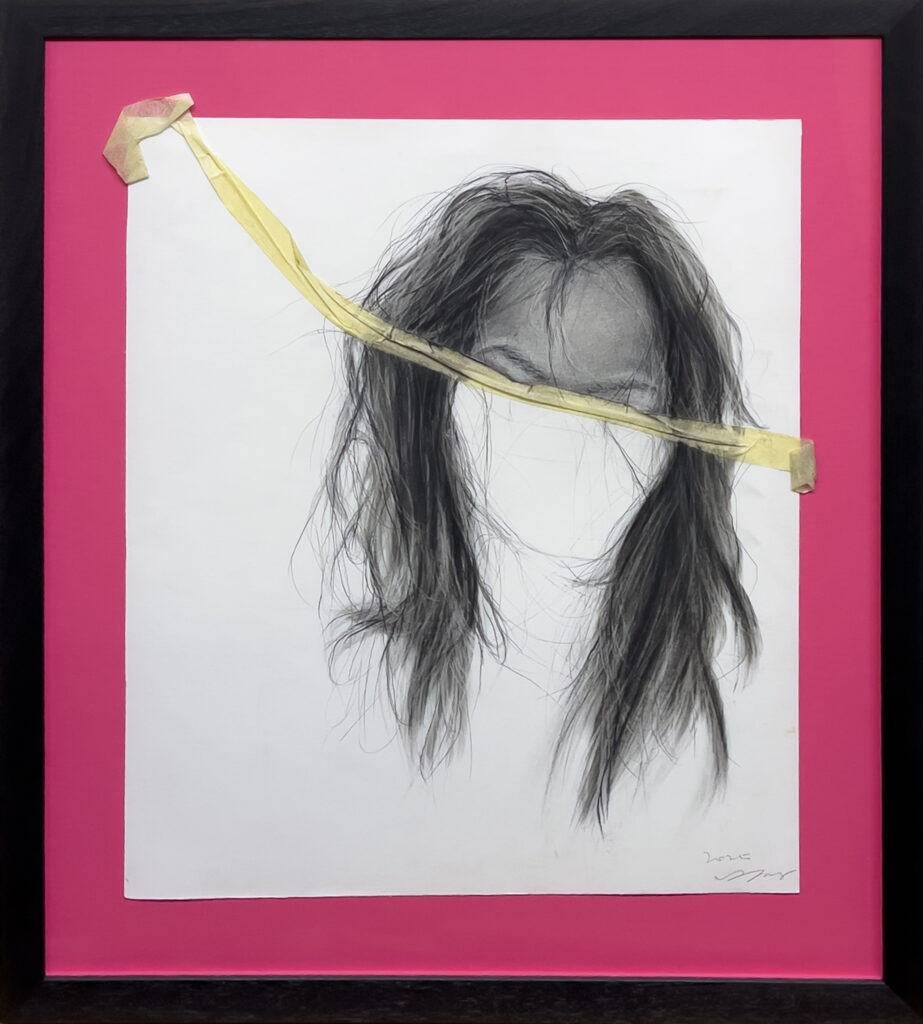
Title: Gaze I
Medium: Charcoal, masking tape,
on paper
Year: 2018
Dimensions: 27.5 x 24.25 x 1 in
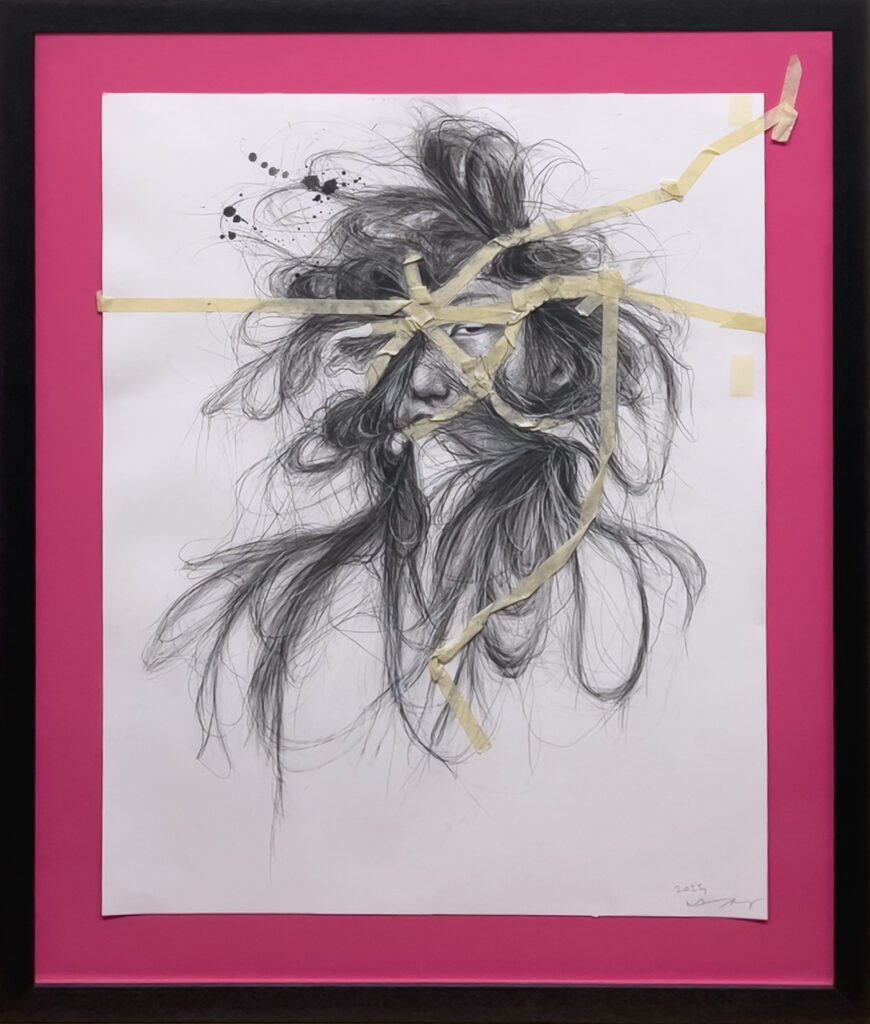
Title: Gaze II
Medium: Charcoal, masking tape,
on paper
Year: 2025
Dimensions: 33.5 x 27.5 x 1 in
Krystal Ramirez
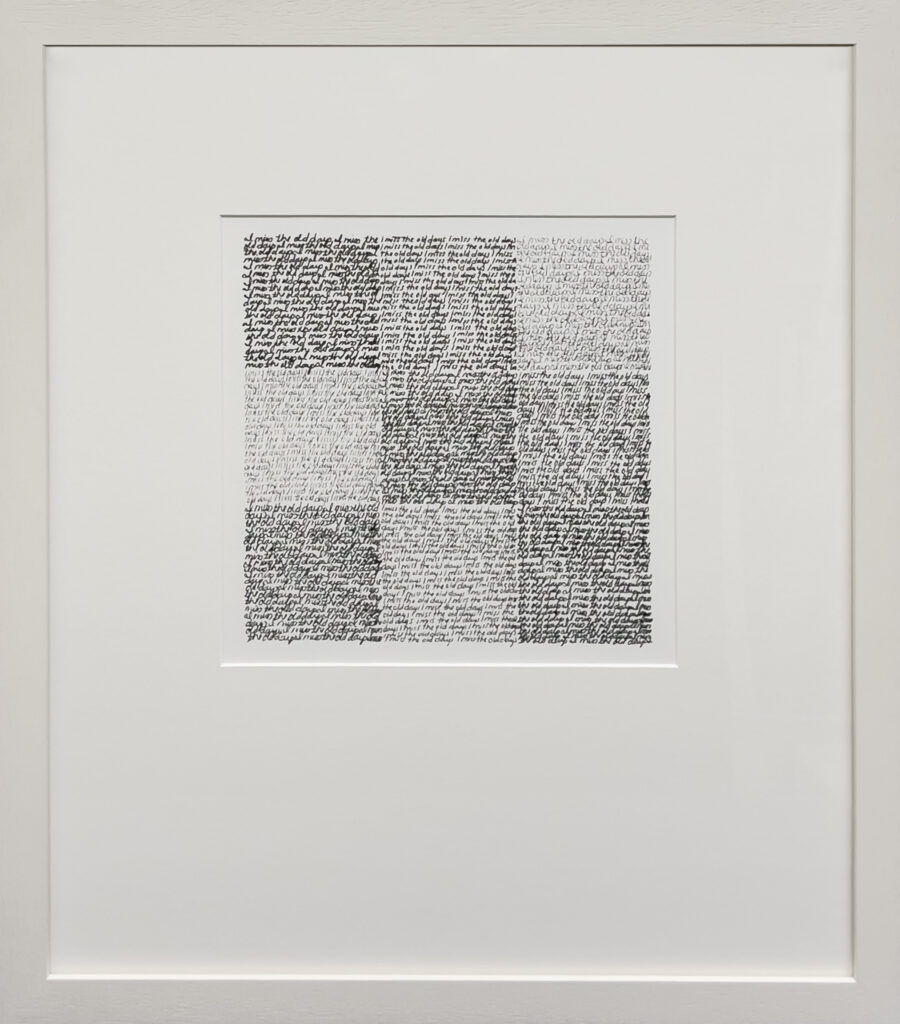
Title: I Miss the Old Days
Medium: Lithograph
Year: 2017
Dimensions: 22.75 x 19.75 x 1 in
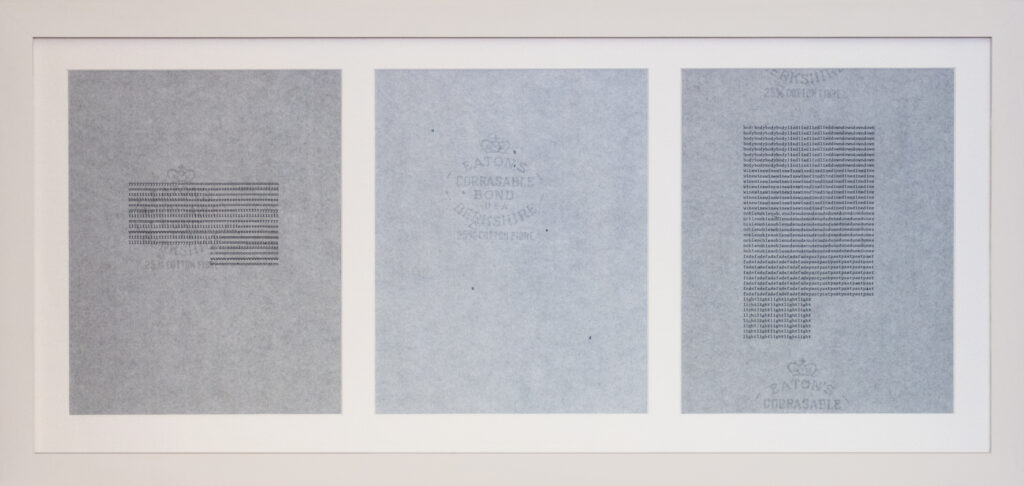
Title: Loves Dunes (triptych)
Medium: Cotton paper, ink
Year: 2021
Dimensions: 15 x 31.5 x 1 in
Peter Wittenberger
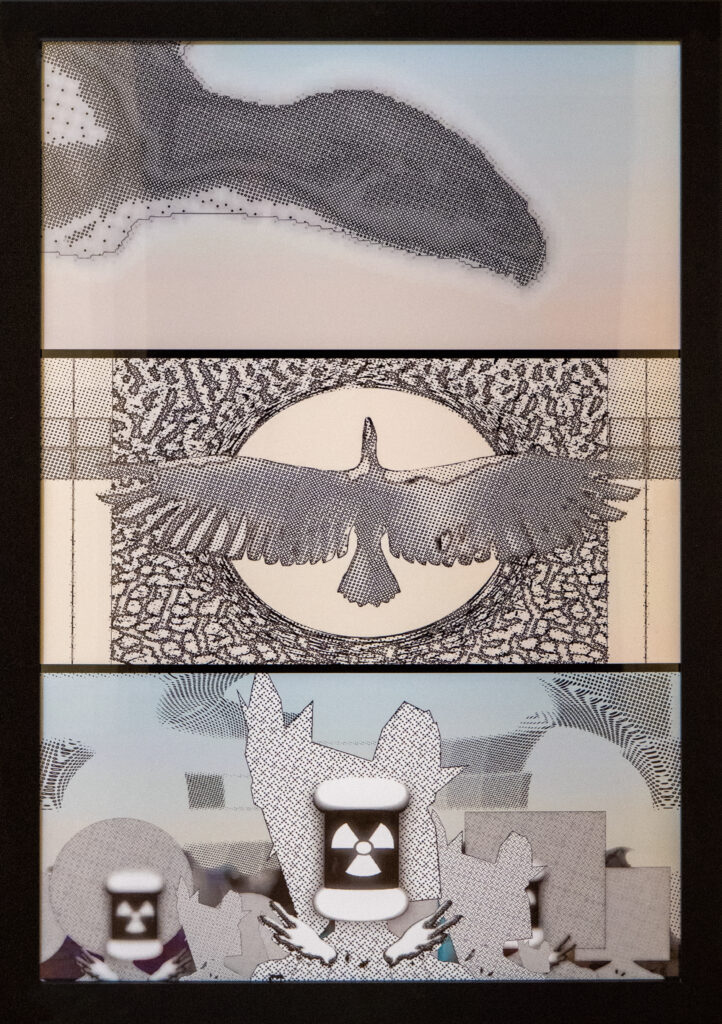
Title: All Possible Futures
Medium: Single-channel video,
inkjet print
Year: 2019–2025
Dimensions: 38.5 x 26.5 x .75 in
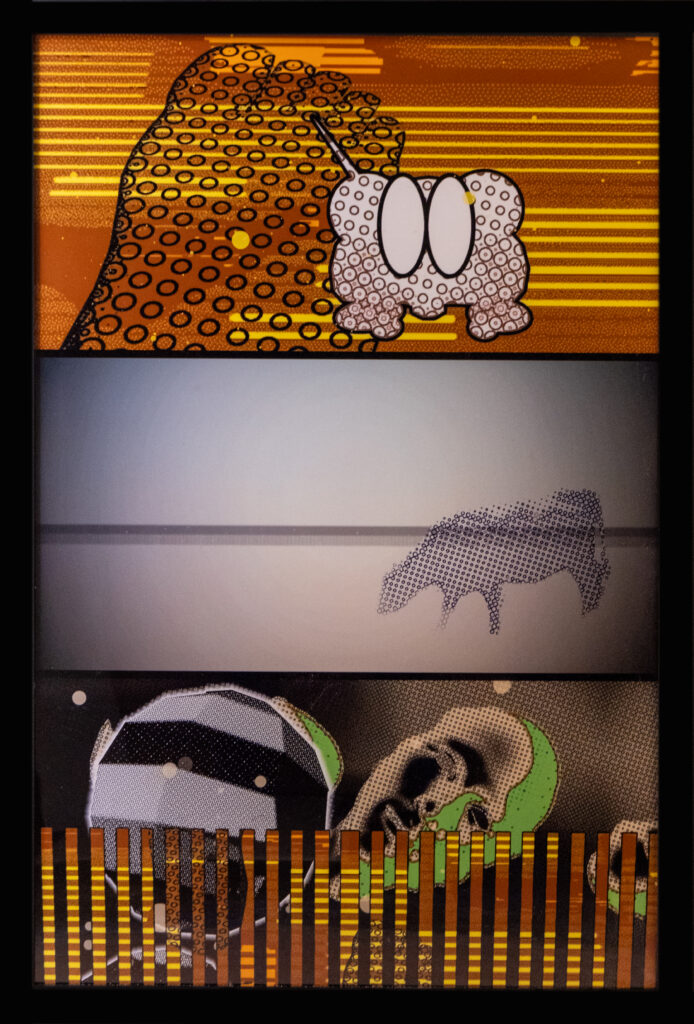
Title: If Only We Had Eyes To See
Medium: Single-channel video, inkjet print
Year: 2023–2025
Dimensions: 38.5 x 26.5 x .75 in
Art as Antidote to the Scroll
For me, the most enjoyable aspect of Six Ways of Seeing turned out to be the various ways this exhibit force-quits my modern scrolling brain, urging me to think outside the feeds to truly look, feel, and connect. These half-dozen Nevada Arts Council Visual Arts Fellowship recipients make work that rewards the deceptively simple act of paying attention. They push back against the habitualized skimming and algorithmically directed noticing that’s become our default way of regarding the world.
Imagine, for example, the time and perseverance required of Krystal Ramirez to handwrite the title phrase hundreds of times for I Miss the Old Days. Thus, it offers a challenge: Can you match her commitment by reading and rereading the same words (no skimming!), navigating the visual anomalies created by her penmanship, until the repetition focuses you into a meditative state, the better to consider which “old days” you miss and why? Do try; it’s the effort that matters.
A quality that Ramirez’s work shares with others in Six Ways of Seeing is what artist Frances Melhop refers to as “a rejection of the slick.” That is, a glossy surface proficiency that masks a bland, shallow, or corporate aesthetic, and often serves to manipulate viewers. Melhop defies that mode in her Odd Girl series by making blind-contour drawings of girls from old tintype photos, then embroidering them onto linen. This grants her wildly imperfect sketches a new tactile heft while maintaining their off-kilter charm and squiggly life energy.
Likewise, Jung Min complicates her charcoal self-portraits, which, in a nod to her South Korean heritage, emphasize her lustrous black hair — as patiently rendered as Ramirez’s strands of text — with strips of grungy, used masking tape. Min’s insistence on unconventional notions of beauty agitates rather than soothes the viewer’s eye while perplexing the authority of the social gaze.
This ethic of defamiliarization peaks in Linda Alterwitz’s recent photographs. Eschewing the typical ways photography depicts the world, she captures abstracted instances of light and heat, using a way of working that invites randomness and idiosyncrasy. Look closely at Conversations 52.2N,45.0W and 76.2N,83.5W, specifically at the faint line across the right-hand image, captured in the Arctic by a thermal camera. No one knows what caused it. Look all you want, the truth remains elusive, destabilizing our routine faith that seeing equals knowing.
Which brings us to the paintings of Lolita Develay, reverberating in glorious counterpoint to most of what I’ve just asserted. Lush in technique, opulent in color, utterly gorgeous (Spill the Beans is literal eye candy), I doubt they’d balk too much at being called slick. But here’s the thing. These paintings aren’t glib. They’re not trying to hoodwink you or sell you something. Rather, Develay slyly employs the aesthetics of slickness to invest her everyday subjects — that is, life as it’s actually lived — with a luminous visual pleasure they’re rarely accorded otherwise. Nothing shallow about that.
In contrast to Develay’s intimate scale, Peter Whittenberger’s short videos (represented here by stills) find his concerns measured in long, futuristic timelines and civilizational anxieties: nuclear calamity, climate change, migration. Nothing slick here! The turkey vulture in All Possible Futures isn’t there to spread good vibes. Still, Whittenberger is clearly invested in hope. See the tiny cell-like dots running through his imagery? They allude to connection, to individuals functioning in unison — qualities humanity needs to survive.
Of course, you’ll need your phone to see Whittenberger’s videos, which you should totally do — once you’re through with Six Ways of Seeing, of course. “Attention is vitality,” Susan Sontag wrote, so spend quality time with these works as they use art’s vital magic to wrestle our attention from the algorithms and return it to us as a gift.
—Scott Dickensheets
Staff & Technical Assistance
Artist Services Specialist / Art Installer
Stephen Reid
775-687-7108
[email protected]